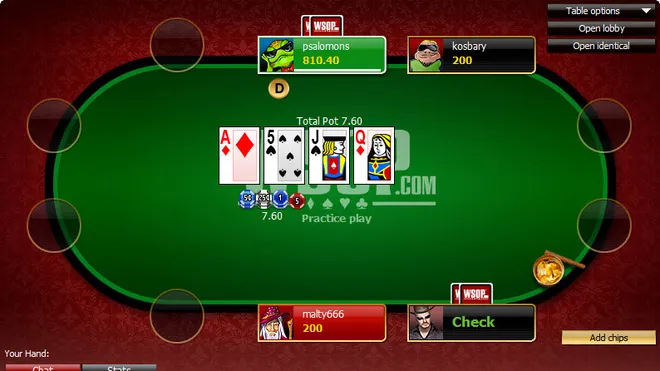
Sit & Go tournaments are one of the simplest ways to get introduced to tournament poker. Unlike scheduled events, they do not begin at a fixed time. Instead, the tournament starts automatically once the required number of players have registered and all seats are filled. That makes them especially convenient for players who want a shorter, more predictable session. PokerStars notes that Sit & Gos can range from small single-table games to larger multi-table formats.
How the Format Works
Everyone pays the same buy-in, starts with an equal chip stack, and plays until only the paying positions remain. The blinds rise at set intervals, which gradually forces the action and prevents players from simply waiting forever for premium hands. Regular-speed nine-player Sit & Gos can last around 50 to 80 minutes, while turbo and hyper-turbo versions can finish much faster.
Single-Table Games Keep Things Simple
For beginners, single-table Sit & Gos are often easier to follow because there are fewer opponents and a more predictable structure. Common formats include heads-up, six-player and nine-player games. They also create a useful environment for learning fundamentals such as position, starting-hand selection, blind pressure and how stack size changes decision-making.
Strategy Changes as the Blinds Rise
Early in the tournament, when blinds are small compared with the stacks, a tighter approach can help preserve chips and avoid unnecessary risk. As the blinds increase and stacks become shallower, aggression becomes more important. PokerNews describes a common SNG approach as playing relatively tight early and then becoming more aggressive as the tournament progresses.
Multi-table Sit & Gos use the same basic concept but involve more players, more tables and usually longer sessions. That adds additional stages and decisions, including deeper tournament survival and payout pressure. For a newcomer, though, the single-table version is often a cleaner place to start: learn how rising blinds change the value of your chips, get comfortable with short-handed play, and then move into larger formats once the structure feels familiar.