
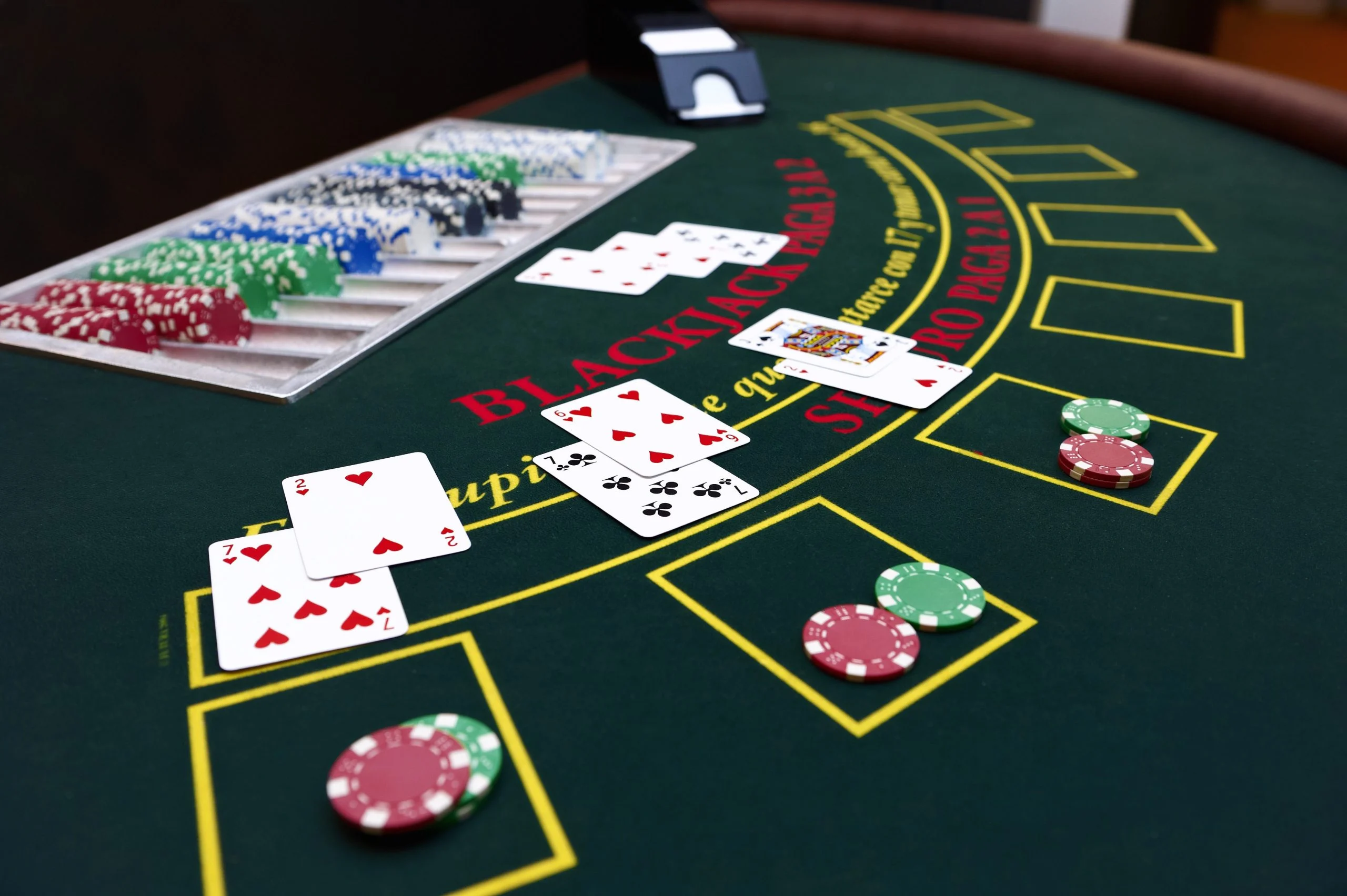
Blackjack can look complicated when you first sit down at a table, but most hands begin with the same four decisions: hit, stand, split or double down. Learning what those moves actually do gives new players a much better foundation before they start worrying about strategy charts, house edge or more advanced concepts.
Hit or Stand: The Two Basic Choices
A hit means taking another card in an attempt to improve your hand. A stand means keeping the cards you already have and ending your turn. As Gambling911 explains, those are the two choices beginners will use most often, although the mathematically correct decision depends on both the player’s hand and the dealer’s visible card.
Splitting Creates Two Hands
A split becomes available when your first two cards form an eligible pair. You place a second wager equal to the first and separate the cards into two individual hands. Each hand then receives another card and is played separately. However, casinos can place limits on re-splitting, splitting aces and doubling after a split, so the details matter.
Doubling Down Raises the Stakes
A double down lets you increase your original wager and receive exactly one additional card before your turn ends. It can be a powerful move when the math favors aggression, but the correct opportunities depend on the rules of the game. Some tables allow doubling on any first two cards, while others place restrictions on when it is available.
Basic Strategy Depends on the Table
Once those four moves make sense, basic strategy tells you which action has the strongest mathematical expectation in a particular situation. But there is no single chart that perfectly fits every blackjack table. Wizard of Odds provides different strategy settings based on factors such as the number of decks, whether the dealer hits or stands on soft 17, whether doubling after a split is allowed and whether surrender is available.
That makes checking the rules an important part of blackjack strategy before the first hand is dealt. A chart built for six decks with the dealer standing on soft 17 may contain different decisions from one designed for another ruleset. Learn the four moves first, then make sure the strategy chart in front of you actually matches the blackjack game you are playing.